Autonomous research workflows
Research tasks can be directed toward new people, claims, events, organizations or topics, with the system collecting material for structured review rather than treating each update as an isolated page-writing job.
Wired West Computing Platform
FORGE stands for Framework for Orchestrated Research, Generation & Expansion. It is a Wired West Computing system for creating information-rich websites that can continue developing after the first pages are published—researching new material, structuring what it finds, connecting related people and topics, generating new website content, validating the resulting build, and publishing updates through an automated workflow.
What FORGE is
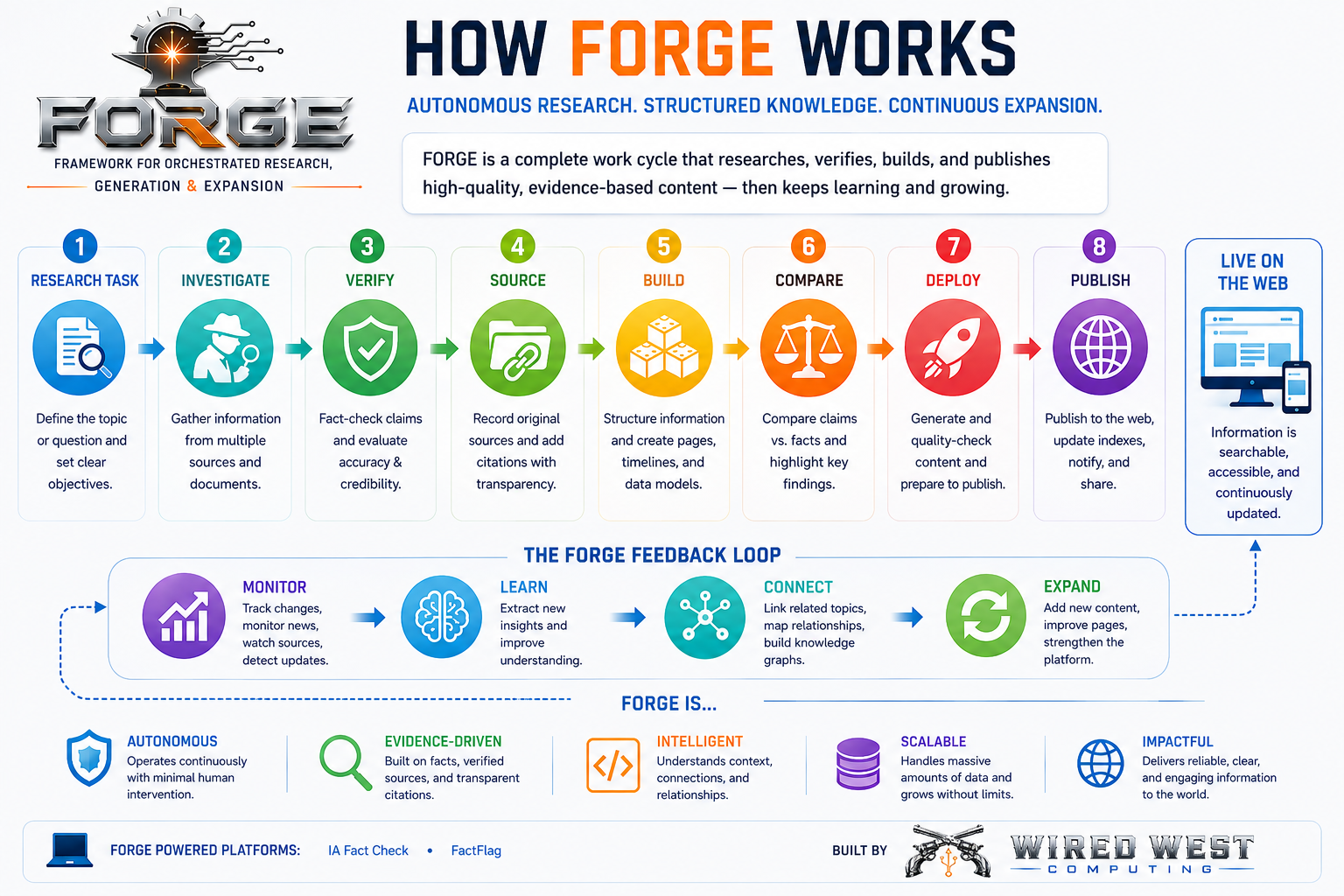
FORGE is an orchestration and publishing framework. AI can be one of the tools inside the workflow, but the platform is larger than a single model or prompt. Its job is to coordinate research, source handling, structured knowledge, page generation, cross-linking, quality checks, packaging, publishing, and future expansion as one repeatable system.
Traditional websites are usually built as a collection of pages and then manually updated. A FORGE project is designed around an evolving information model: people, organizations, claims, events, sources, topics and relationships can be added over time, and the website can grow around that model without losing organization or source context.
Core capabilities
FORGE combines the repetitive parts of deep website research and publishing into a system that can keep operating as the underlying project gets larger.
Research tasks can be directed toward new people, claims, events, organizations or topics, with the system collecting material for structured review rather than treating each update as an isolated page-writing job.
Source links, primary records, supporting reporting, disputes and context can remain attached to the information they support so a published page retains an auditable trail instead of becoming unsupported generated prose.
New research is organized into reusable entities and relationships—people, institutions, subjects, claims, events and records—allowing later work to build on what the project already knows.
Structured research can be transformed into profiles, timelines, topic pages, directories, source libraries, fact checks, navigation and related-content links while preserving a consistent site design.
The platform is designed for projects where the finished site is never really “finished.” New research can create new pages, extend existing pages and strengthen connections between existing material.
Automated checks can verify branding, navigation, internal links, content structure, package integrity and other project-specific rules before a new build becomes the production handoff.
Validated builds can be packaged and handed to site-specific publishing watchers, allowing research and website generation to flow into repeatable deployment rather than ending in a manual upload queue.
Project rules, editorial corrections, layout decisions and successful research patterns can be carried forward into future builds so the workflow becomes more consistent as the site matures.
Basic workflow
The exact implementation changes by project, but the basic loop is intentionally simple.
The important difference
A normal content workflow often starts with “write a page.” FORGE starts with “understand and structure the information.” Once a subject is represented in the underlying model, the same research can support a profile, a timeline, a topic index, a source list, a related-person link, a claim review, a news update or a future research task.
That separation is what makes large sites easier to expand. The system does not have to rediscover the same context every time another page touches the same subject.
Built with FORGE
The first FORGE deployments are research-heavy sites where information, sources and relationships keep growing rather than staying fixed after launch.
Deployment 01
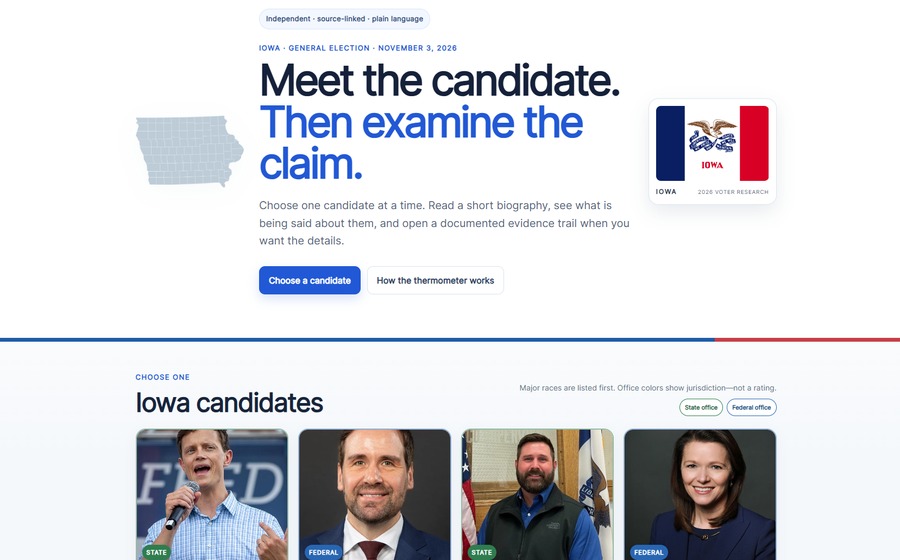
An Iowa-focused candidate and political-claims research site that combines candidate profiles, campaign media, voting and public records, claim reviews, source trails and continually expanding election research.
Visit IA Fact Check →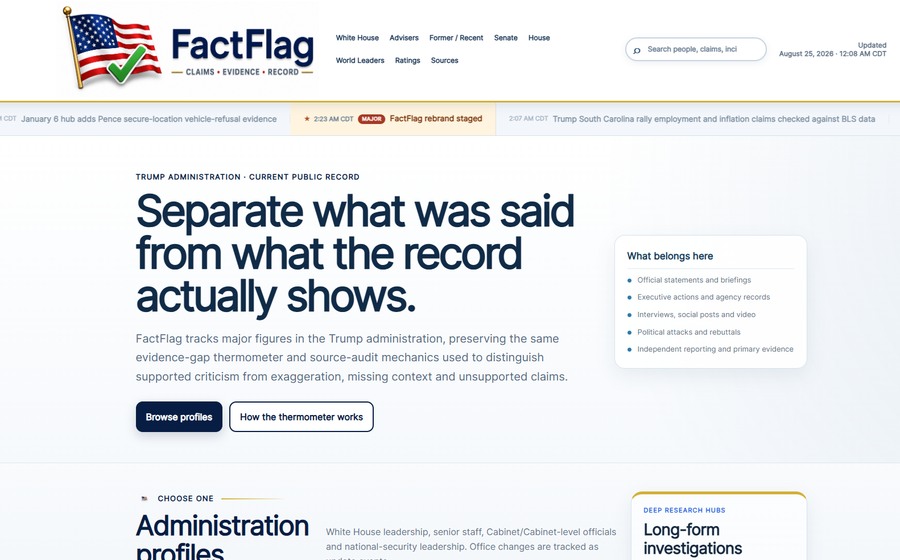
Deployment 02
A national public-record and claims-research system covering administration officials, Congress, advisers, world leaders, institutions, cross-profile topics and deep research hubs with evidence-aware source tracking.
Visit FactFlag →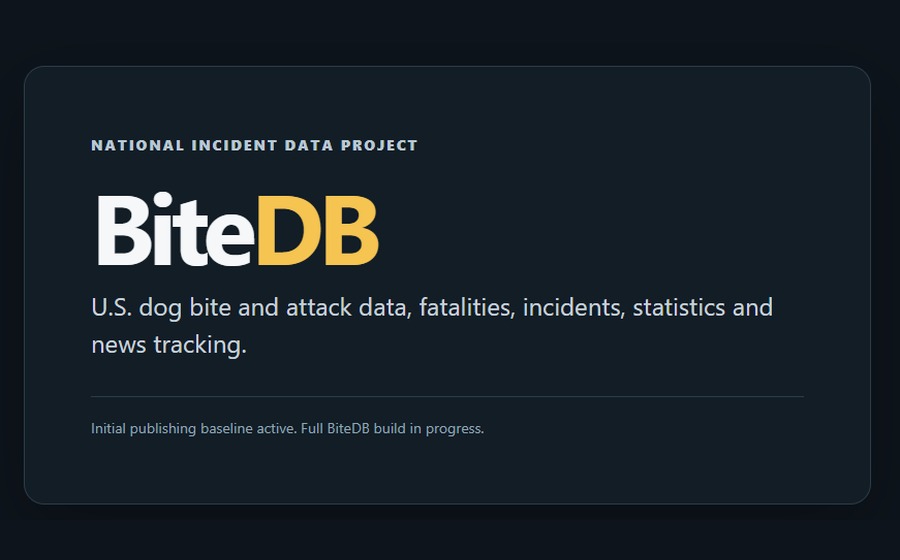
Deployment 03
A continuously expanding dog-bite and attack research database that organizes incident reporting, source-backed news records, breed attribution when reported, fatality and injury data, statistics, media and searchable incident history.
Visit BiteDB →Designed for difficult information projects
FORGE is most useful when a website has to absorb a lot of changing information, keep sources attached to it, connect related subjects, and continue publishing without turning into an unmanageable pile of manually edited pages.
Wired West Computing
IA Fact Check, FactFlag and BiteDB are the first working examples. The broader goal is a repeatable system that can be adapted to other research-heavy, data-rich websites while retaining project-specific rules, presentation and editorial control.